

Table of Contents
Top Criteria for Your Wetsuit Decision
Now that you understand why a wetsuit matters, selecting the ideal model hinges on a few essential factors. The best wetsuits for open water swimming and triathlon balance fit, thickness, flexibility, buoyancy, and durability.
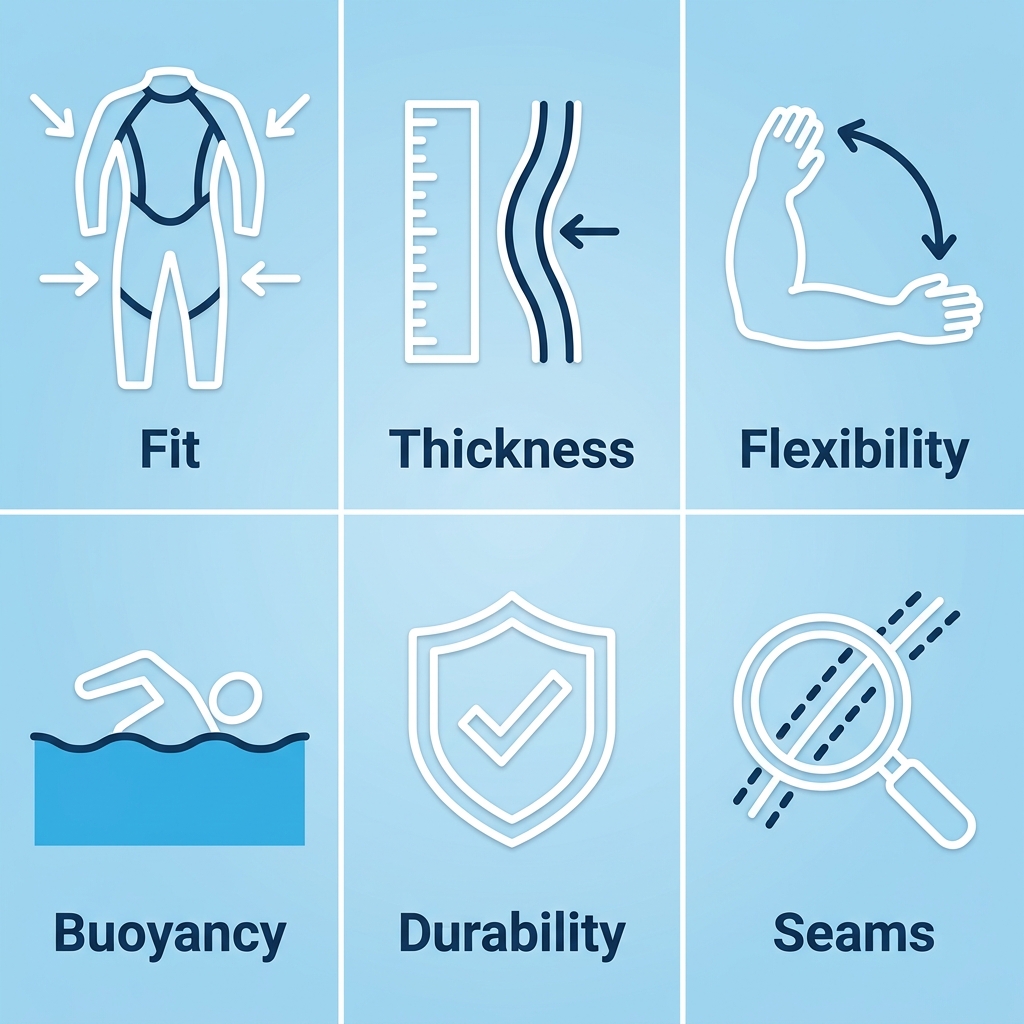
A snug yet comfortable fit is critical for swimming wetsuits: a tight seal around the chest and shoulders prevents water from flushing through while still allowing full breaths. Thickness varies by conditions--thinner 2mm or 3/2mm suits work for warmer waters, while 5/4mm neoprene keeps you toasty in colder swims.
Flexible shoulder panels in open water swimming wetsuits let you rotate and extend without restriction, cutting fatigue with every stroke. Strategic buoyancy in the core and legs lifts your hips, reduces drag, and conserves energy for the bike and run--an edge that triathlon wetsuits are designed to deliver.
Durability comes down to glue and blind-stitched seams that resist leaks and extend the suit's life, plus reinforced knee panels for tough transitions. Price ranges vary among top brands, but investing in a quality wetsuit pays you back in comfort and speed season after season. We help you balance budget and features.
Browse our full selection of competitive swimwear and gear to find your match--and remember, we're always Serving Swimmers with Southern Hospitality Nationwide.
Achieving the Perfect Wetsuit Fit and Sizing
Now that you know why a wetsuit is essential for wetsuits for open water swimming and triathlon, let's ensure you get the perfect fit. A proper wetsuit fit is snug but never restrictive. The suit should feel like a second skin, tight enough to prevent water flushing but loose enough for comfortable, full breaths. If you're also exploring vibrant gear for the pool, consider how a Speedo colorblock one piece brings that same performance-focused design to your collection.
What to Evaluate
Start by checking for air gaps around the lower back, behind the knees, and under the arms. Next, use a flexible tape to measure your torso from the base of your neck to your crotch, then your arm and leg lengths. A tailored swim wetsuit size ensures your range of motion stays unrestricted. When planning for a race, remember that wearing a tri suit under wetsuit layers can slightly alter the overall fit, so test the combination before race day.
 Horizontal diagram of wetsuit fitting evaluation steps.

How to Evaluate
We recommend a two-stage test. Try your wetsuit on dry first, then repeat in the water. Reach both arms overhead as if starting a freestyle stroke, then squat down to mimic a water start. Check for chafing at the neck, armpits, and crotch. A well-chosen pair of open water swimming wetsuits will allow these motions without resistance. This is also the moment to confirm your tri suit under wetsuit combo doesn't restrict your breathing when you're horizontal.
What the Answer Means
If the suit feels like it's restricting your inhale or leaves red marks, size up. If water pools inside or the suit sags, size down. A well-fitted suit among triathlon wetsuits adds buoyancy without fighting your body. Review brand-specific sizing charts for your swim wetsuit size since each model balances compression and flexibility differently.
With your perfect fit found, proper care will extend its life. Serving Swimmers with Southern Hospitality Nationwide, we're here to help--contact our team for sizing help anytime.
Maximizing Buoyancy and Body Position with Your Wetsuit
What to Evaluate
Wetsuits for open water swimming and triathlon rely on buoyancy panels to lift your body level. Triathlon wetsuits often have 3-5mm neoprene zones for targeted lift. Wetsuit buoyancy comes from these strategically placed thickness variations. Choosing the right buoyancy profile ensures a streamlined position.
- Chest panels lift your upper body.
- Hip and leg panels keep your lower body from dragging.
- Check for balance to avoid tilting forward.
How to Evaluate
To evaluate your swimming body position, get in the water and float on your stomach. Notice if your legs sink or if you feel tilted forward. Try rolling onto your back to check support. For a more isolated test, use a Speedo swim training snorkel so you can focus on body roll without turning to breathe. Open water swimming wetsuits should keep you balanced; try different tempos.
What the Answer Means
If the wetsuit holds you level, you'll reduce drag and swim faster. If your legs sink or hips sway, you need more lift--swimming wetsuits with full buoyancy can help. A sleeveless wetsuit trades lower-body lift for arm freedom, ideal for strong kickers. For help finding your ideal suit, reach out. Serving Swimmers with Southern Hospitality Nationwide. Contact customer service for exact lead times and availability.
Now that you understand buoyancy, explore how flexibility impacts your stroke.
Selecting the Right Wetsuit Thickness for Your Water Temperature
Now that you know the basics, thickness is key. Choosing the right wetsuit for open water swimming and triathlon depends on water temperature--we're here to help.
What to Evaluate
Understanding neoprene thickness starts with a simple temperature guide:
- Above 70°F: 1.5mm
- 60-70°F: 3mm
- 50-60°F: 5mm
- Below 50°F: 5mm+ or a drysuit
Saltwater vs freshwater wetsuit performance differs because saltwater pulls heat faster--consider going one thickness step up. Wind chill makes 65°F water feel colder--a 3mm jacket helps. Our open water swimming wetsuits account for these variables.
How to Evaluate
When picking swimming wetsuits, use a waterproof thermometer at swim depth--surface water can be 5°F warmer. Early-spring water may be 10°F colder than late summer; check buoy reports. If you chill easily, go one thickness step up.
What the Answer Means
So which thickness? A 1.5mm suit works for warm water, 3mm for moderate, and 5mm for a true cold water wetsuit. Our wetsuits for open water swimming and triathlon are built to handle real conditions. Layering a neoprene vest under a 3mm suit can extend its range. For triathlon wetsuits, quick-release designs save transition seconds. Don't forget accessories: neoprene caps, booties, or gloves. For younger swimmers, our Speedo kids swim goggles offer comfortable eye protection.
Ready to find your perfect fit? Browse our collection and hit the water stronger with every lap.
Wetsuit Red Flags to Avoid When Shopping
When shopping for wetsuits for open water swimming and triathlon, watch for these wetsuit red flags. For swimming wetsuits, look for glued and blindstitched seams rather than overlocked stitching, which can leak. Steer clear of any wetsuit missing a sizing chart or wetsuit care instructions; without proper rinsing and storage, your wetsuit won't last. For triathletes, ignoring triathlon rules like the 5mm thickness limit can get your wetsuit for open water swimming and triathlon disqualified. Choose a suit meeting industry standards from the World Federation of the Sporting Goods Industry, and let our team at Splashwear Aquatics help you find the right fit -- Serving Swimmers with Southern Hospitality Nationwide.
Questions to Ask Before Buying a Wetsuit
Choosing the right wetsuits for open water swimming and triathlon requires asking a few key questions. We're here to help you find the perfect fit. Before you shop, consider these wetsuit purchase questions:
- What water temperatures will I swim in? - This determines the thickness you need; open water swimming wetsuits with proper insulation keep you safe and comfortable.
- How flexible are the shoulders? - Freely rotating arms are essential for efficient strokes; look for swimming wetsuits with stretchy shoulder panels.
- Which zip style suits my race and routine? - Front-zip triathlon wetsuits provide added range of motion, while back-zip models offer easier entry and removal.
- Is it better to rent or buy? - The rent vs buy wetsuit decision hinges on how often you'll swim; frequent users often prefer owning for better fit.
- What makes a good entry-level wetsuit? - Look for an entry-level wetsuit that balances buoyancy, flexibility, and price so you can train confidently.
- Does the wetsuit come with a solid warranty and easy returns? - Checking the return policy helps protect your purchase if the fit isn't quite right.
Once you have these answers, explore our wetsuit collection to find your perfect fit.
Wetsuit Cost Expectations and Budgeting
Wetsuit cost for open water swimming and triathlon depends on neoprene thickness, material, and features--entry-level suits start under $200, mid-range swimming wetsuits cost $200-$400, and premium triathlon wetsuits exceed $800. Investing in a suit with better buoyancy and flexibility often means spending more.
Setting a wetsuit budget depends on your training frequency and race goals. Splashwear Aquatics offers competitive pricing on open water swimming wetsuits and triathlon suits, so you'll find value at every triathlon wetsuit price point. Think of your purchase as an investment in comfort and speed--we're here to help you choose without overspending, because every swimmer deserves quality gear, and that's Southern Service Nationwide.
Local Open Water Swimming and Triathlon Considerations
Now let's look at how local conditions in Arkansas shape your wetsuit needs. When selecting wetsuits for open water swimming and triathlon, we always consider water temperature. In Arkansas lakes like Lake Maumelle and Lake Ouachita, spring and fall temperatures in the 60s call for 3mm to 5mm swimming wetsuits. Even in summer, local swimming conditions--currents, visibility, and sudden weather shifts--may demand thinner open water swimming wetsuits with good buoyancy.
For triathletes, USA Triathlon rules set clear boundaries: wetsuits are legal up to 78°F and mandatory below 60°F. At US open water venues and events like the Little Rock Triathlon or Ironman 70.3 Arkansas, these guidelines align closely with our seasonal lake temperatures. An Arkansas triathlon in early spring might require a thicker triathlon wetsuit to stay warm. Always check event water temperature updates before race day.
Global standards from the World Federation of the Sporting Goods Industry (WFSGI) set benchmarks for buoyancy, thickness, and competition compliance. Matching these to your local venue ensures your wetsuit supports strong, confident swimming in Arkansas.
Your Wetsuit Buying Checklist
From our team in North Little Rock to yours, here's your wetsuit checklist for open water swimming and triathlon.
- Fit first: Snugness without restriction; try different brands.
- Thickness: Swimming wetsuits offer 3mm for warmth or 5mm for cold.
- Shoulder flexibility: Triathlon wetsuits allow full arm rotation.
- Durability: Choose reinforced knees and smoothskin panels.
- Zipper: Chest zips seal better; back zips are simpler.
- Buoyancy: Open water swimming wetsuits improve body position.
- Purpose & Gear: Match your primary use and add to your triathlon packing list as pre-race gear.
Once you've checked off the essentials, explore our detailed guides -- we're proud to serve swimmers with Southern hospitality nationwide.
Wetsuit FAQ for Triathletes and Open Water Swimmers
Still have questions? Here are quick answers to common wetsuit concerns.
What are the WFSGI rules for wetsuits for open water swimming and triathlon? The WFSGI limits wetsuit thickness to 5mm and regulates buoyancy for fair competition. Triathlon wetsuit rules require compliance for safety.
Sleeveless wetsuit vs full-sleeve: which should I choose? A sleeveless wetsuit provides greater arm mobility, preferred for warm-water swims, while full-sleeve wetsuits add warmth and buoyancy. Both are legal in age-group triathlons, and our wetsuits for open water swimming and triathlon come in both styles.
Any open water swim tips for putting on or taking off a wetsuit quickly? Use a plastic bag over your hands and feet to slide through the cuffs; to remove, peel the wetsuit inside out while damp, and avoid using sharp objects.
Is there a thickness restriction for swimming wetsuits? Yes, WFSGI standards cap thickness at 5mm for open water swimming wetsuits to prevent excessive buoyancy.
Start Your Wetsuit Journey with Expert Support
At Splashwear Aquatics, we specialize in wetsuits for open water swimming and triathlon. Whether you need a racing wetsuit, are making the transition to open water, or preparing for your first triathlon, we guide your wetsuit selection, serving swimmers with Southern hospitality nationwide. Contact our team to start your wetsuit journey today.